
Following DuPage County Recent Arrests
DuPage County runs no verified countywide feed of arrests from the last 24 hours. The Sheriff's portal comes first. The official entry point is the DuPage County Sheriff Inmate Search, which routes searchers to the JailTracker portal the Sheriff selected. That tool answers one question: who is in county custody right now. It may miss someone held by a municipal police department. It may miss a person already released. Transfers out of the county fall outside it too. For the release side, the Sheriff posts a separate Recently Released Inmates page, though its date window, fields, and update cycle are not documented.
Illinois law sets a firm ceiling: covered arrest information must be furnished no later than 72 hours after the arrest. That rule is not a web-refresh schedule. Intake, transfer, and release all shift what a live check displays. Need something faster? Arrested Today lays out a same-day fallback sequence. Arrest Reports covers Wheaton's weekly blotter and older records.
| Window | Best verified route | Custody meaning |
|---|---|---|
| Same day | Sheriff Inmate Search and Recently Released | Current county custody or a separate release-side check |
| Several days | Wheaton weekly reports and historical news archives | City arrest publication, not a live countywide roster |
| After booking | DuPage Circuit Clerk and Records Division | Court progress or a retained booking file |
Who Was Arrested in DuPage
Arrest and custody are not the same thing. Check the Sheriff's live roster first. An empty result is not always a no. County intake may still be underway, a city may hold the person, or release may have already happened. For booking and bond questions, call the official line at 630-407-2255. Write down the time of any call or portal check. A custody status can change quickly. One name matters most here. The VINE Arrest Check page explains how to confirm the holding agency and register for custody alerts.
Searching DuPage County Jail Records
The DuPage County Correctional Facility holds people awaiting trial. Some serve terms of up to one year or periodic imprisonment. Its roster is reached through the Sheriff. The results appear on a JailTracker domain hosted at public-safety-cloud.com. That redirect matters. It marks the difference between the Sheriff's chosen vendor and an unaffiliated arrest publisher. Use only the search fields the live screen offers. Field labels can change, so trust the portal itself over any secondhand description.
| Result detail | How to use it | Evidence limit |
|---|---|---|
| Name or identifier | Match against known details | Exact live search labels must be confirmed |
| Arresting agency | Shows which agency delivered the person | Use only when the result displays it |
| Booking date and charge | Places the charge in time | Not a conviction or final charge |
| Bond and status | Helps read current custody | Refresh timing is unpublished |
| Photo | May identify the intake record | Public display is unverified and not guaranteed |
Open the official landing page, follow its redirect, and enter the available name or identifier. Do not stop at a name match. Agency, age, booking date, charge, and custody status can separate two similar people. Compare them whenever those fields appear. Read the result closely. It should state current custody, release, or transfer. Then turn to the Circuit Clerk. Missing photo? Request the booking file from the Sheriff's Records Division rather than assuming none was taken.
- Begin with the Sheriff’s official Inmate Search link.
- Search the live JailTracker fields and compare the full result.
- Check Recently Released if current custody is not shown.
- Call the booking line for a time-sensitive status question.
- Request the retained booking file when a dated record is needed.
The Sheriff's annual reports answer one question. They confirm that front and profile photographs are taken during intake. Released booking files move to the Records Division. Neither fact promises a permanent online image or a lasting roster history. The Sheriff also publishes no fixed update cadence or roll-off period. A person can be booked, bonded out, or transferred. That can happen before any roster check ever shows them.
Where DuPage Arrest Records Appear
Go to official channels before news sites or commercial pages. Each official source plays a narrow role. JailTracker shows current county custody, while a city report describes the arrest itself. The release page captures a later custody state. The Circuit Clerk carries the legal record forward, the Illinois Department of Corrections covers later prison or parole status, and federal locators handle federal custody. No single source substitutes for the rest.
| Channel | Official? | What it can establish |
|---|---|---|
| Sheriff Inmate Search | Yes | Live DuPage County jail custody |
| Wheaton Crime & Arrest Reports | Yes, city only | Weekly city arrest details and archive |
| Circuit Clerk case lookup | Yes | Case events and disposition after arrest |
| Sheriff app and News Digest | Yes | Selected news and tips, not a booking feed |
| Local newspapers | No, editorial coverage | Selected stories, not every booking |
| Private county pages | No | Possibly stale copied data requiring official verification |
Private DuPage pages at Busted Newspaper, RecentlyBooked, Mugshots.com, Arrests.org, and JailExchange exist. They may republish public material. They are unofficial, often stale, and never proof of custody. Mugshots.zone lists no DuPage-local section, so its front page says nothing about local coverage. Official agency and court records control, and no booking photos appear here.
Recent Arrests Across DuPage Cities
Every DuPage city handles custody differently. Aurora Recent Arrests can start inside the Aurora Police Department's own detention operation. That makes a county roster hit a later and separate question. Naperville Recent Arrests run through Naperville Police Records and FOIA requests. The city posts no daily booking roster. Wheaton Recent Arrests offer the clearest local publication. Weekly official reports may list arrest, bond, transfer, and discharge, with mixed image availability.
Aurora and Naperville both cross county lines. Their full populations and police activity cannot be counted as DuPage-only figures. Wheaton is the county seat, yet Wheaton Police and the Sheriff still create separate records. Identify the arresting agency first. Check county custody only when a transfer to the DuPage County Correctional Facility is documented.
DuPage Arrest Intake Creates Photos
A lot happens in DuPage County before any booking photo becomes public. The Sheriff's 2023 annual report walks through the intake steps. Staff pat-search each person and run a body scan. Digital fingerprints go to Illinois State Police. Front and profile photos come next, along with charges, court data, screening, property, and demographic entries checked against law-enforcement systems. That order matters. A photo being taken and a photo appearing online are two different questions in DuPage County arrests. Intake policy covers the first one. The second depends on what the public interface currently shows and what the Sheriff chooses to disclose. The intake image belongs to one custody event only. It is not a portrait of how someone looks after release, and a city police record can exist before county intake, meaning a person released from municipal custody may never reach the DuPage jail roster, a split that matters most for Aurora arrests.
Inside a DuPage Arrest Record
A DuPage booking file is not the officer's incident report. It is not the prosecutor's charging document or the court's judgment either. It starts the moment a detention facility receives someone. Processing creates the record. Public details sit across separate systems. Some fields come from agency reports rather than a stable roster card. Medical, psychological, and fingerprint data stay off the booking page.
| Field | What it means |
|---|---|
| Legal name and identifier | Identity entered for the intake event; verify similar names carefully |
| Booking date and time | When county intake began, not necessarily when a web result appeared |
| Arresting agency | The police or sheriff unit that delivered the person |
| Charges as booked | Charges at intake that may later change |
| Bond and court information | Release-processing and initial court details, if displayed |
| Received, discharged, transferred | Custody transitions covered by Illinois arrest-information law |
| Booking photograph | An intake image; current public portal display must be checked live |
- Booking
- The jail’s intake and record-creation process.
- Bond
- A court-set condition that may permit release while a case continues.
- Disposition
- The court’s outcome, such as dismissal, acquittal, plea, or conviction.
- Expungement
- A legal process that can erase eligible records under a court order.
DuPage Mugshots and Booking Photos
Mugshot is the common search word, but booking photo is more precise. The Sheriff confirms multiple views at county intake. The office does not promise that every JailTracker result shows one. No fixed online period is set either. A live roster image is that record's intake photo. Without one, send a focused booking-file request to the Sheriff's Records Division. Ask whether the photograph is releasable.
Illinois law lists a photo among arrest information when and if available. Some misdemeanor photos on social-networking sites are restricted as well. Both rules are narrow, with no blanket right to every photo and no statewide ban. Juvenile records carry stronger confidentiality. A public search should never identify a minor.
The Illinois Department of Corrections keeps admission photos for people in state custody. Its public locator works as a status and identity search. An image counts only when the live result displays one. IDOC is not a recent DuPage booking feed. Private sites may run older images, duplicates, or wrong matches. Treat their cards as unreliable on current custody.
Requesting DuPage Arrest Records
Booking files from the DuPage County Jail go to the Sheriff's Records Division after release. Walk-in hours run weekdays, 8:00 a.m. to 4:30 p.m. FOIA requests can be emailed. Write to FOIA@DuPageSheriff.org or fax 630-407-2263. One caution: the Sheriff's FOIA page prints ZIP 60432 while current agency contact pages use 60187, so verify the postal code before mailing or simply use email and fax.
- Identify the person, approximate arrest or booking date, and arresting agency.
- Ask for the specific booking file, photograph, or incident report rather than “all records.”
- Send the written request through the Sheriff FOIA channel or the city that made the arrest.
- Ask the office to state any exemption, redaction, fee, or missing-record reason.
- Use the Circuit Clerk separately for case events and final disposition.
The posted fee schedule covers incident and accident reports only. It sets no booking-photo price. Confirm any charge before ordering a file or image. Illinois FOIA gives a response framework, but review time varies with scope, redactions, and extensions. City records belong with the agency that wrote them. The Sheriff cannot correct a report it did not create.
Bond and DuPage Release Timing
DuPage County takes bond around the clock, every day of the year. Cash, certified or cashier's check, money order, and credit card all work. The official page details each option. A statutory processing fee applies, and card vendors may add charges. Bond access is not roster speed, though. Release processing, transfers, and the public portal run on separate systems in DuPage County. No official source quotes an exact delay between bond posting and a JailTracker result changing or disappearing.
For live status, call the booking and bond line. Then try the Recently Released route. Note the time you checked it. An online result vanishing does not mean the file was destroyed, and a stale private copy does not mean the person is still in custody.
Illinois Arrest Records and Removal
5 ILCS 140/2.15 sets the baseline for arrest-information disclosure in Illinois, covering identity, charges, arrest time and place, agency, custody transitions, and any photo when and if available. 815 ILCS 505/2QQQ stops covered publishers from demanding payment to remove or correct criminal-record information. That is the disclosure floor. The second law targets paid removal.
Errors in a booking record can be fixed. For an agency error, name the exact record and its source URL, describe the factual problem, and attach an official order or other proof. A sealing or expungement order goes to the agency that holds the record. Illinois Courts provides standardized sealing and expungement forms, and the Office of the State Appellate Defender offers statewide guidance. There is no universal wait period. Eligibility varies with each record.
Try the free routes first. RecentlyBooked and Mugshots.com publish correction and record-maintenance procedures at no cost. Busted Newspaper offers a contact route only. Arrests.org may show a correction control, but its eligibility rules and timing are not published. Keep proof of each request. Never pay to forward a demand. After the source changes or removes a page, Google's Refresh outdated content tool can request a search-result update.
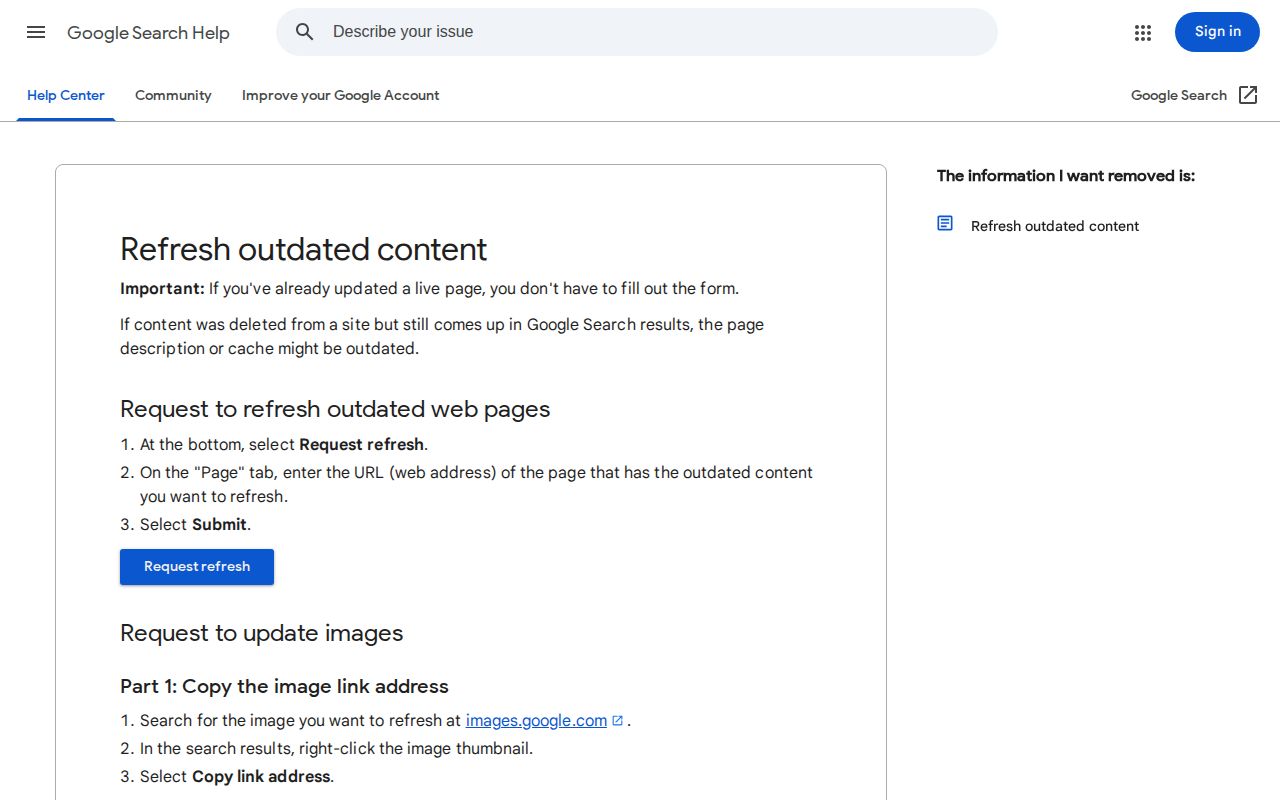
This process changes a search index, not the Sheriff’s record or a publisher’s database.
Where Old DuPage Records Go
Released booking files follow a set path in DuPage. The Sheriff says they move from Corrections Receiving and Discharge to the Records Division. That division maintains county-jail booking files. No online retention period is published for booking photographs or roster results. Portal visibility and agency retention are two different things. Illinois law also requires approval before local public records are destroyed under an authorized schedule.
Older arrests take legwork. Start with any official city archive. Search the Circuit Clerk. File a narrow Sheriff or city records request, and ask which retention schedule governs the series. The Illinois State Archives and regional depositories can identify transferred historical series. The DuPage holdings search lists no Sheriff booking series. The old County Farm Road jail is institutional history, not an arrest archive.
DuPage Warrants and Most Wanted
Two official paths cover a DuPage warrant check. The Sheriff's Warrants Division handles warrant matters, and the Circuit Clerk case lookup locates the related docket. Neither confirms a live warrant in real time. JailTracker answers a different question: whether a person is already in county custody. Keep the three searches separate.
The Sheriff's Most Wanted page publishes sought names. It is not a record of all DuPage County arrests. The list count, card fields, image policy, and refresh timing are not stated. Never approach a listed person. Send tips through the Sheriff's anonymous crime-tip page or its text route, and call 911 for an emergency. To resolve a warrant, contact the court, the warrant unit, or counsel.
One caution remains. The DuPage court search is the official docket-side resource.
Only the responsible office can confirm a live warrant.
After a DuPage County Arrest
Custody is only one chapter. After booking, an arraignment or first hearing addresses the charge and release conditions. Later docket entries may record amended counts, motions, plea proceedings, trial, dismissal, acquittal, sentence, or appeal. The Circuit Clerk is the official path for those events. A roster card shows a hold, not the outcome.
Let each record do its own job. The booking record identifies the event and the agency. The court docket follows the case. If a sentence brings Illinois prison or parole, the IDOC locator becomes relevant for custody status.
DuPage Arrest Counts Need Context
Numbers need labels. The Sheriff's 2025 body-worn-camera report recorded 448 incidents and 452 offenses charged. Warrant and domestic-battery categories are included. Those figures cover Sheriff body-camera activity only. They do not count arrests by Aurora, Naperville, Wheaton, or other municipal departments. Nor do they count every booking at the county facility. A city can arrest without creating a Sheriff body-camera event. One incident can carry several charges.
Use each agency report for the population and method it defines. Mixing booking totals, arrest totals, court filings, and enforcement data would build a false countywide trend.
DuPage Records Beyond County Custody
State custody is a different system. The Illinois Department of Corrections offender search takes a last name, IDOC number, or birthdate and covers people in a state institution or on parole. It does not list everyone recently arrested or held at the DuPage County Correctional Facility. State status and sentencing appear there. Case history stays with the DuPage court docket.
Other locators serve other governments. The Federal Bureau of Prisons locator covers federal prisoners and publishes no booking photos. The ICE Online Detainee Locator handles immigration custody. Neither substitutes for JailTracker, and VINE should not be assumed to cover federal custody, so match the locator to the agency actually holding the person.
Search DuPage Arrest Records
Match the search to the event. Then verify any result with the public office that created the record.
Public Record Search
Sponsored Results